 Sticky logo
 Search


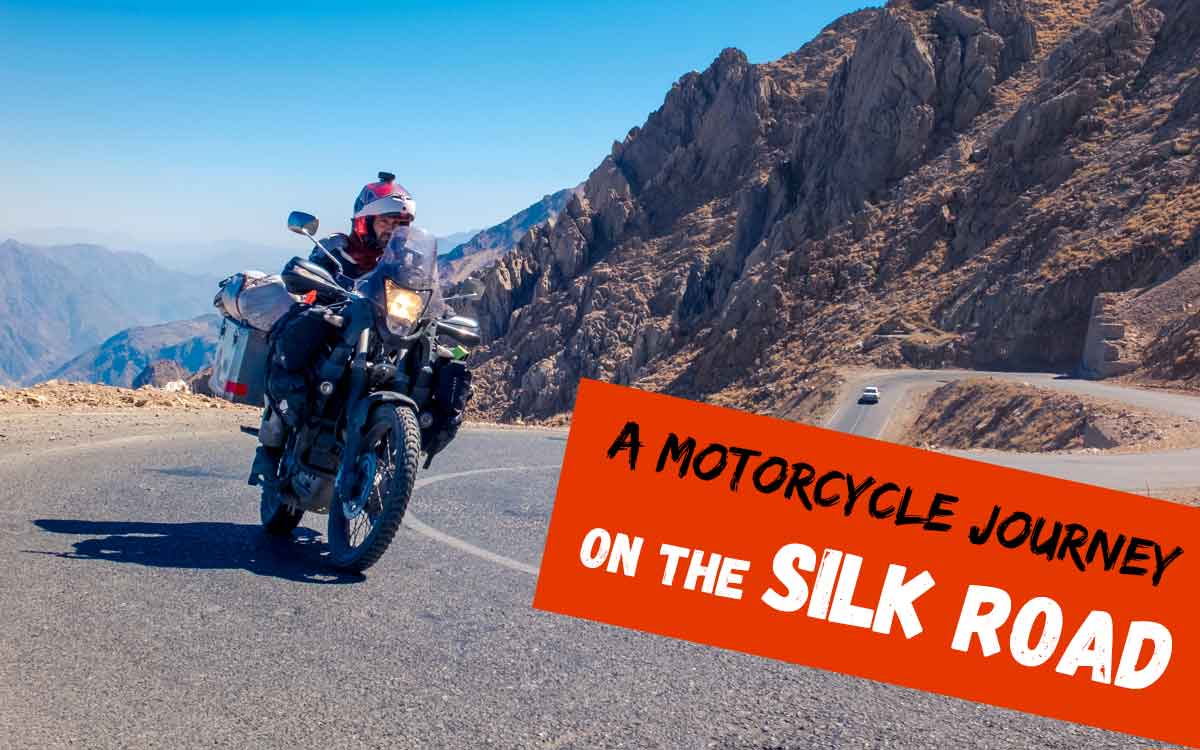
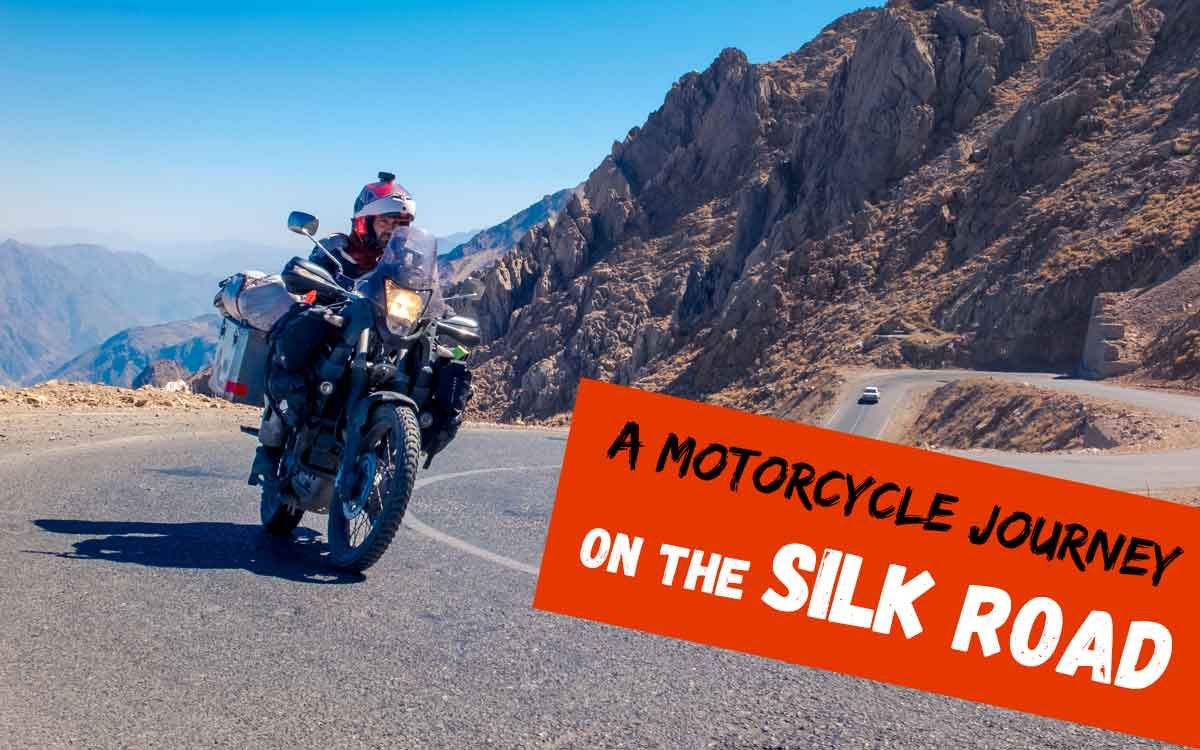
The ancient Silk Road is synonymous with legendary stories and characters. The trade route between Europe and Asia initially brought Chinese silk and other exotic goods to the Roman Empire. The most famous traveler was Marco Polo, who reached China via the Pamir Mountains. But it’s the southern “road” through Iran’s deserts and Pakistan’s mountains where you can still experience adventures like no other.
• Anatolia Mon Amour
Istanbul’s mosques along the Bosporus were the first indicator we were entering another world. As the road wound deeper into Turkey through sunburst planes, climbing conifer-covered mountains to Göreme, Cappadocia, every merchant we encountered was a further reminder we were following in the footsteps of long-ago commerce. Caravansaries are massive, unassailable buildings with central courtyards where caravans to and from the Far East rested. Their hosts offered us trade goods and weren’t discouraged when we explained we didn’t have room on our motorcycle. Instead, they’d persist by inviting us to buy smaller objects or, if we preferred, to have them shipped to our home—and if that won’t work, what about our friend’s home? From Cappadocia onwards, we were offered deals on everything, including carpets, tea, coffee, and tobacco.
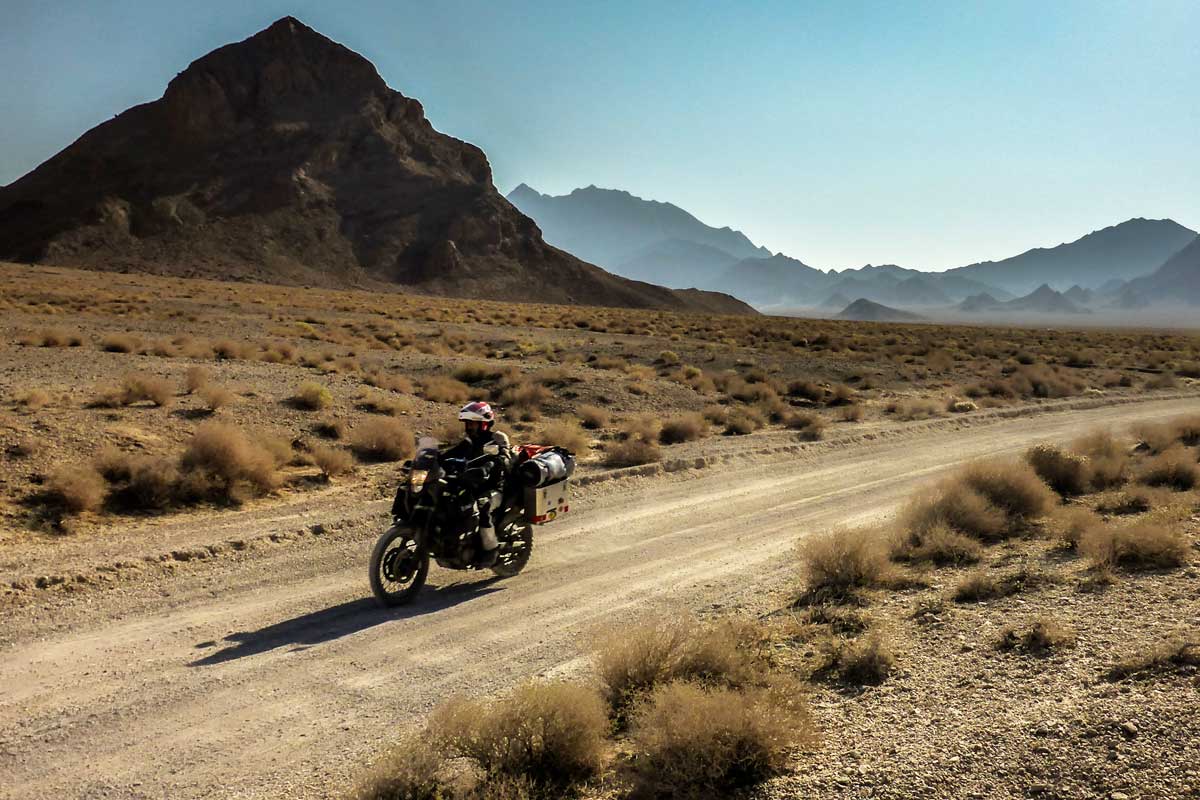 Crossing the rocky desert of central Iran.
• Where Orient Begins
The real adventure began after crossing the Euphrates River into the barren plains of Kurdistan. This was one of the Silk Road’s main junctions, between the Eurasian steppes in the north and the Persian route in the south with a history of prosperous times interrupted by conflict. The main was the advance of the first Caliphate in the 7th Century, after Muhammad’s death. Thirteen-hundred years later, this part of the world is afflicted again by a newly self-declared caliphate whose appearance has halted traffic and trade and reignited old conflicts.
We had coffee and spent the night at a tea house in Siirt; many warned us it was dangerous to travel in the dark. The guerrillas they speak of seem contradictory to the kindness and hospitality of those surrounding us in their traditional garb.
Everyone wanted to talk and offer tea. The tension from the previous night, when we stopped due to gunfire between Marxist-Leninist rebels and the military, vanished like the mountain’s dust on the road leading to Sirnak. We spent an entire day riding just a few dozen kilometers, meeting a family washing their carpet along a river and enjoying a day with them, drinking tea and smoking hand-rolled tobacco.
 Turkish Kurdistan: The tire repairer had never seen a big bike before, so Antonio had to do it himself.
• The Real Truth
We stayed almost a week in Sirnak with Amy, an American journalist who dedicated six years to the Kurdish cause, helping Yazide refugees who escaped Iraq when militant enemies attacked. These were days of intense storytelling about hopes, tear gas, and military tanks. We were touched by the Kurds’ struggle and their oft-ignored plight.
Crossing Iraq en route to Iran was like traveling in another dimension. Constant military checkpoints seemed incongruous against the rugged mountains with pastures populated by shepherds and smiling children. I pondered what was left of the ancient route where goods, ideas, music, and religions moved. What remained after centuries of conflict? The love and brotherhood that these peoples offered over the ages were still here, evident in locals’ hospitality, despite the eras of bloodshed.
 Wild camping near the Zoroastrian temple of Chak-Chak, Iran.
• In the Land of Persepolis
Contrary to the impressions we’d been given, Iran was so quiet and safe that it was almost boring. Every time we stopped, someone offered hospitality. And we often met people with illuminating wisdom.
In an economic system originally based upon international trade, Muhammad mandated his followers help travelers and others in need. And it is important to note that the friendly Iranians we met wanted us and the rest of the world to know they are not terrorists.
 A camel herder riding his bike. In Iran, people often decorate their bikes with small carpets and tissue bags—very functional, indeed!
Iran may be the country that provided the strongest sense of reliving Marco Polo’s adventure. All we had to do was lose ourselves in any bazaar, crowded with veiled women scurrying amongst spices and other exotic items around tiny, centuries-old shops, while mosque officials called the faithful to prayer five times a day from their minarets. In the larger cities, where bazaars often teem with tourists, Western women wore the hijab (imposed by law), often playfully, like modern “Mata Haris.” Iranian women have learned to get around the strict theist laws by showing small locks of hair through the hijab, fashionably framing their beautifully made-up faces.
 All we had to do was lose ourselves in any bazaar.
• The Desert’s Color
The Iranian plateau is a dry mountain range. Over the centuries, they’ve learned to save every water drop and maximize air currents, key considerations of their architecture. We headed for Yazd, the driest city in the country. Surrounded by deserts, Yazd’s skyline is a contrast between the domed mosques and wind towers designed to capture and move breezes through underground tunnels as natural air conditioning.
 The road connecting Yazd to Chak-Chak, Iran, is a painted white stripe into nothing.
The city of Shiraz was built along similar lines and equally impressive. From there, our journey continued to Balochistan, a region divided between Iran, Afghanistan, and Pakistan. Many years ago, this was the branch of the Silk Road connecting China to the Indian Ocean, along the Indus River and Karakorum Range.
We stayed for a few days in Bam, at the Akhbar Guest House, enjoying dates, tea, and chats with Mr. Akhbar, well-known to overlanders from all over the world. We wanted to relax before tackling Pakistan, where our travels would become riskier. Everyone said Zahedan, the last city before the border was a crossroad of opium smugglers, Taliban, and Baloch nationalists. We had to be escorted by police, who took our passports and gave us no choice but to follow their every rule. Although they were strict and allowed no photos, they were as kind and hospitable as the rest of the country.
 With the German bikers at the Akhbar Guest House in Bam, Iran. Akhbar, on the right, is a real institution for travelers.
• Balochistan Police, Your Best Friends in Pakistan
Crossing the Pakistan-Iran border took an entire day. We joined a caravan with two German bikers we’d met at Akhbar’s along with a few others led by a tour operator. The Pakistani border, unlike its Iranian counterpart, was shabby and seemed devoid of security precautions. After crossing, we spread our sleeping bags in a police station that night, as the chief told us about their main enemy—the Taliban.
 Happiness during the one-day ride from the Taftan border to Quetta, Pakistan.
These policemen, whose motto is “Your best friend in Pakistan,” were precise and professional despite their limited equipment. Leaving and riding into the desert sunrise brought some of the most amazing views of our trip, but our convoy’s slow speed was certainly not a motorcyclist’s dream. The worse was 18 hours of riding at the max speed of 30 km/h, with the police constantly on alert as we were surrounded by a sense of danger. We stayed in Quetta for a day, guarded in a hotel under police surveillance even though the real target for the Taliban was the police themselves.
The escort continued to Multan, where we met the most famous biker in Pakistan, Muhammad Iqbal Ghangla, who is always ready to host visiting motorcyclists. Iqbal’s hospitality was total. After a princely breakfast every day we’d have meals at one of his friend’s homes or visit the sights of Multan City, experiencing life from inside such a different culture.
 Pakistan Levies are provincial paramilitary forces in Pakistan providing local security; they also provide escort service to travelers.
From there, we stayed with a family in Islamabad, receiving another warm welcome before heading out on the Grand Trunk Road, crowded by trucks, buses, pedestrians, carts, cows, and chickens… it seemed anything that could move was on that road. The traffic was crazy. Everyone seemed to drive without rules on roads so dusty that attempting to clean our visors was pointless.
• Karakorum Highway, Finally!
From Islamabad, we made it to the Chinese border in about a week, where we achieved our dream of riding the Karakorum Highway. It was thrilling but difficult, following the Indus River through lost mountain villages. We were in a different world, where men wore the traditional dress of baggy pants, long shirts, and half-dome caps known as Taqiyahs.
From Abbottabad onward, the police were again with us most of the time, and we grew accustomed to their Kalashnikovs, while occasionally joking around or taking photos with them. You might imagine us taking the pictures, but it was the other way around. We were constantly surrounded by crowds armed with smartphones. And always, the same questions: “Anything I can do for you, Sir?” “Need help?” “Let’s drink a cup of tea!”
At Attabad Lake, created by a massive landslide in 2010, swarming crowds brought every kind of goods imaginable to and from China on motorboats. It’s their life here, exchanging goods, ideas, and technologies just as they’ve done for centuries. It took four hours to load our bikes onto a boat, a difficult task for workers on the steep gravel shore.
Here, where the Karakorum range meets Himalaya and Hindukush, where Asia geologically melds with Europe, we experienced a world we assumed had disappeared long ago. Although everything had changed, the spirit of the Silk Road still existed.

• Out of the World in the Wakhan Corridor
We were nearly frozen by the time we made it to the Khunjerab Pass, near the Chinese border at 4,700 meters. Everything was covered by snow. In that infinite white nothingness, a yak looked on, ignoring us shouting and waving our arms to celebrate our victory. China was there, but we would not enter; we spent some days in Zood Khoon, a small village in the Chapursan Valley, only reachable by crossing 50 kilometers offroad.
There we were hosted at the Pamir Serai Guesthouse of Alam Jan Dario, a poet, musician, philologist, and anarchist traveler. At his traditional home built around the fireplace without electricity or running water, we discussed the problems of this part of the world—and how they could be resolved by education. Alam believes there cannot be progress until educational reform displaces religious fundamentalism. But the people we’d met along this trip were serene and peaceful, despite their difficulties and lack of possessions when compared to our Western culture. I could only hope that as things changed that they’d never lose their better values.
We eventually made our way back to Islamabad and then Lahore, where we’d continue to India. But that is another story….
 Antonio Femia is an Italian travel journalist and photographer. At 30 he jumped on a saddle and never looked back, using motorcycles as a tool to discover the world. And at 40, he quit his career as an architect to ride the dusty roads, searching for beauty mostly where a motorcycle isn’t supposed to be. TotoleMoto.it


Comments