 Sticky logo
 Search


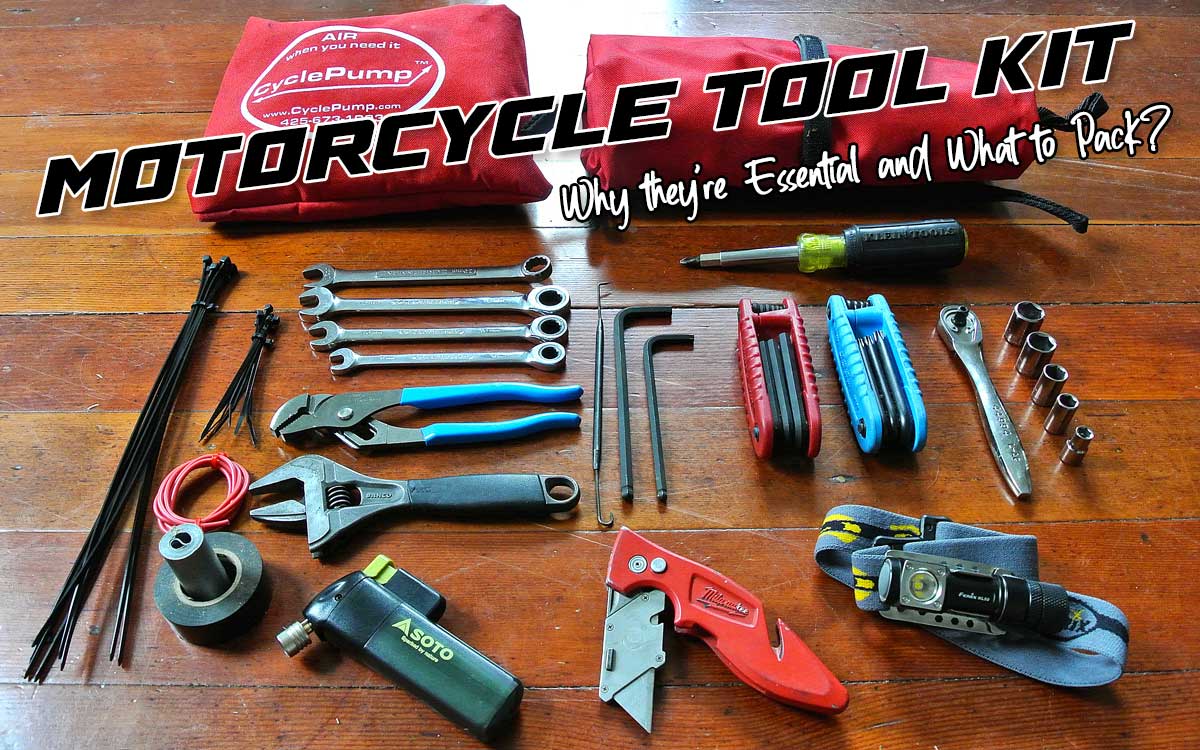
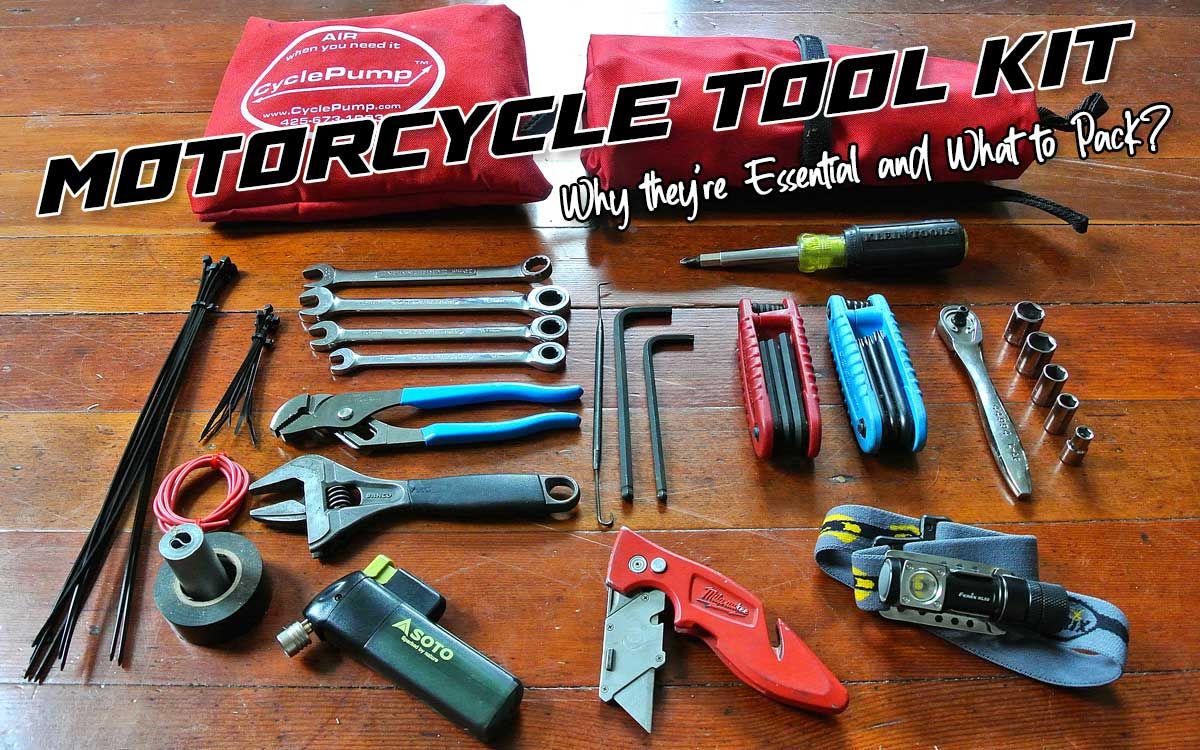
A tool kit is an unusually personal thing—highly subjective because what might be essential to one person could be excessive to the next, or vice versa. Your personal tool kit is also specific to the type of motorcycle that you ride, the riding you partake in and the distances you travel. There’s no worse feeling than realizing you have to postpone or cut an adventure short because you don’t have the right tool to fix your bike.
• No interest in working on your bike?
No one imagines they’ll be stranded by something as simple as a loose battery connection, or face the adverse effects of riding 1,500 miles home with a clogged air filter because they don’t have the necessary tools. With a little planning it’s easy to be prepared for these situations. Carrying at least a few basic tools is good practice, even if you never want or plan to use them.
• So you don’t care how much weight you carry or how much room your tools take up?
It’s okay if you want to be the person that carries around everything except the kitchen sink but it’s important to weigh the pros and cons of having a large tool kit. I personally don’t want to be lugging around twenty extra pounds of tools or spare parts.
• Where to start?
If your motorcycle came with a tool kit that’s a good start. They’re usually not of the highest quality, but typically the kit will give you a good idea of what you need for routine maintenance.
If your motorcycle did not come with a tool kit get your hands on a generic one from Cruz Tools or Aerostich and build it up from there. Then learn to disassemble your bike! Seriously, start taking it apart. Do the maintenance you feel comfortable with or plan on performing on a trip. If you have a repair manual this would be a good time to become familiar with it. The internet and local dealerships can be great learning resources, as well. By practicing common fixes like pulling the wheels for tire repairs or inspecting/adjusting the valves you can save a lot of time and aggravation when you’re out there. The best way to figure out what you need is by doing the work while in the comfort and security of your garage.
Take note of the tools you are using the most and how they could work better or be improved upon. Spend some time becoming familiar with the typical fasteners and threads of your machine. Once you feel confident, start looking at maintenance intervals. Determine if you’ll need any specialty tools, gaskets or gauges for your trip.
It is easy to get carried away with what you think might be needed, but determine what is essential. If you plan on putting a Band-Aid on whatever problem your bike is having just so you can limp it to the local shop (if there is one) obviously you don’t need to bring as much as the person who plans to be completely self-sufficient. Then again, sometimes a temporary fix is as good as it gets on the side of the road. A good tool kit is always evolving.
• What are some of the essentials in my tool kit?
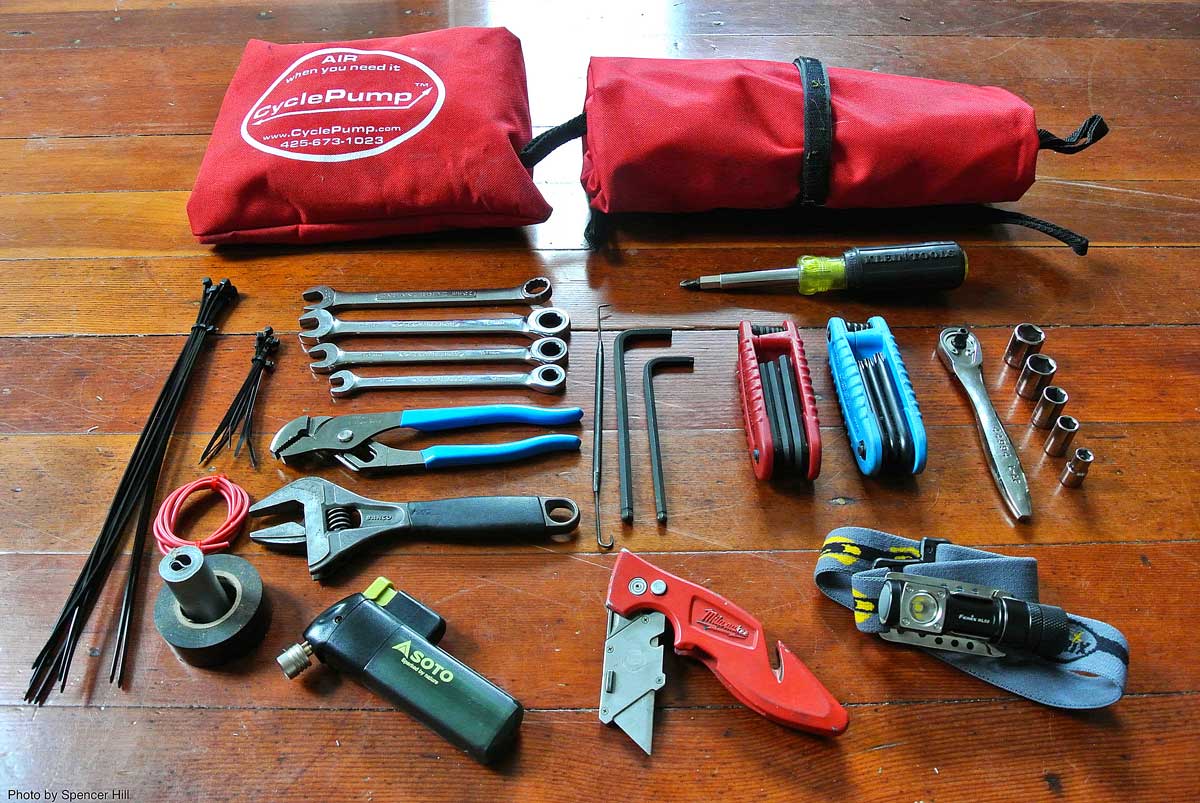
- Tire repair/changing equipment and pump.
- Craftsman folding Torx set and a folding metric Allen set.
- 32 and 27mm Best Hex wrench by BestRest Products for my front and rear axles.
- 6″ Bahco adjustable wrench that can expand to 32mm. Bahco makes the best adjustable wrenches in the world and I never leave home without one.
- Small pair of slip joint pliers for everything the Bahco can’t do.
- Klein Tools 5-in-1 screwdriver/nut driver.
- Small assortment of cable ties, tape, safety wire, 14-guage wire and JB Weld.
- 1/4″ ratchet with specific sockets for my bike.
- A few bike-specific end wrenches.
- Utility knife with extra blades. Many uses including stripping wires and scraping off gaskets.
- Soto Pocket Torch. Turns your disposable lighter into a torch.
- Fenix HL50 headlamp.
• Living with your tool kit
After you’ve traveled with tools the next thing you can think about is improving upon quality while possibly shaving some weight or bulk. There are some clever lightweight and multi-purpose motorcycle-specific tools out there that are worthy of consideration. A lot can be said about having the right tool for the job and it’s important to consider that not all tools are created equal. Higher quality tends to last longer, and an initial investment in quality tools can really pay off.
Having the right tools and knowing how to use them can be the difference between an expensive tow bill and an uninterrupted adventure.

Comments