 Sticky logo
 Search


“Love is all you need in the world. Well, at least, until you die of thirst.”
—Jarod Kintz.
• Steve’s Story
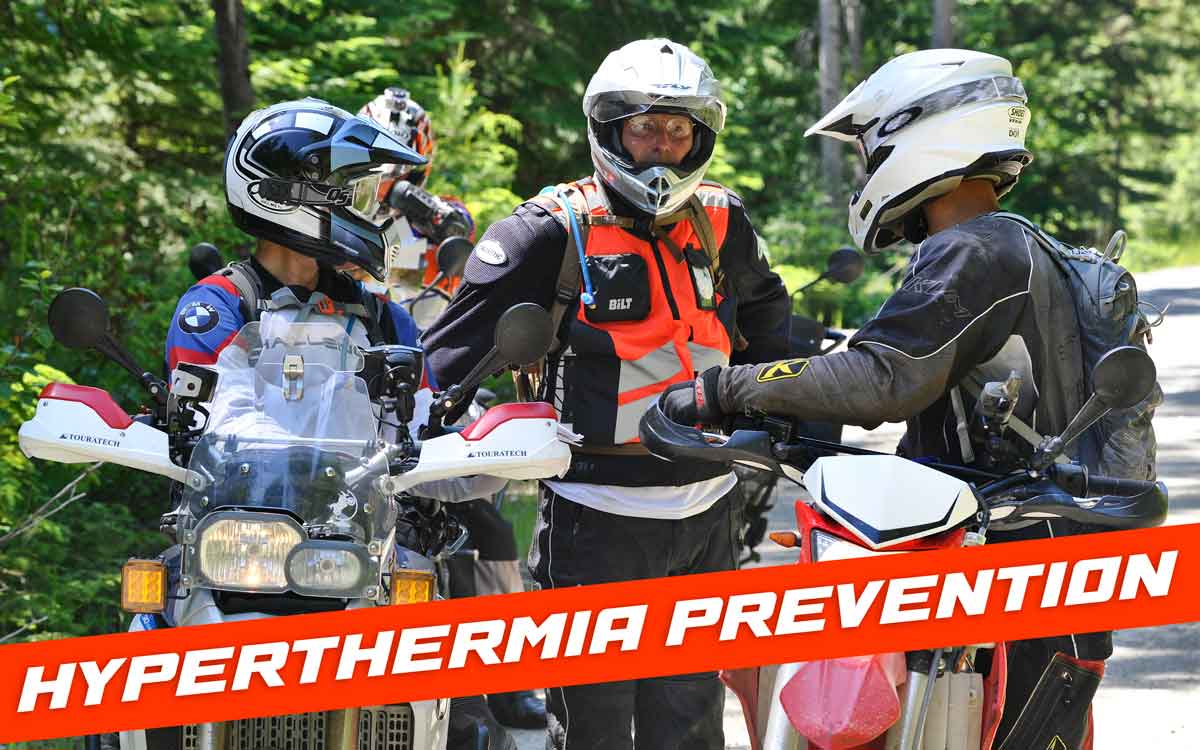
On his first summertime group ride, Steve quickly realized how much physical effort it takes to ride on alternating singletrack and forest roads; standing on the pegs most of the time, wrenching the bike out of ruts, and occasionally having to pick it up when it goes down. He was wearing his heavier jacket and pants, and sweating profusely.
It felt like the sun was melting his helmet. Steve’s throat was parched from his ragged breathing. He had a canteen buried in one of his saddlebags, but every time he managed to catch up with his friends, they just took off again, never giving him the opportunity to get to the water.
Not only was Steve getting tired, but he was also lagging farther behind, making stupid mistakes, going wide on turns, and not braking smoothly. He felt a little queasy and it seemed as if he was riding in a fog. When he finally met up with his group again, he clumsily got off the bike, dabbed at the kickstand with his foot, missed, and didn’t even try to grab the handlebars as the bike fell over.
Steve was suffering from hyperthermia. His body, not acclimated to summer heat, was trying to cool off by sweating, but he wasn’t drinking enough water to adequately hydrate himself, and evaporative cooling caused by sweating can only cool the body so much. The classic symptoms are fatigue, nausea, confusion, slower reaction time, and, possibly, fainting.
• Prevent Hyperthermia for Yourself
Hyperthermia is more than an inconvenience. If you don’t aggressively address your water deficit and overheating, you can suffer from heat stroke, when your body is completely unable to adequately cool itself. This can lead to seizures, unconsciousness, coma and, possibly, death.
How do you avoid hyperthermia? Just keep hydrated. By the time you feel thirsty, you are already dehydrated. If it’s your first riding day in a new (hot) place, take it easy and get acclimated. Drink water proactively before you get on the bike—and continue to drink throughout the day, which means keeping your water handy, not buried in a saddlebag. There’s a reason Dakar racers wear Camelbaks or other hydration systems. Pace yourself, especially if you’re not accustomed to the heat where you are. Take plenty of breaks (in the shade, if there is any), especially in the hottest part of the day. Wet a bandana and wear it around your neck when riding.
How to determine if you’re hydrating enough: Have you been constantly drinking? Are you feeling tired? Lagging behind? Are your riding skills off? A quick field test is to determine how often you’re urinating. If you haven’t been urinating, or if your urine stream is dark and intermittent, versus copious and clear, then you have problems.
If you sweat enough, and drink enough water during the course of a hot day, you will need electrolytes (salt, magnesium, potassium) to help your body transport nourishment and fluid across cell walls. While snacks such as salted peanuts and bananas contain sodium and potassium, there are many sport drinks on the market containing quickly bioavailable electrolytes. Find a brand you enjoy, and consider diluting it to avoid the cloying sugary taste. I keep some widely available Pedialyte (an oral electrolyte drink made for children) in my first-aid kit to add to water in case I run out of energy drink, or if there’s a hydration emergency with another rider (see below).
• Helping a Riding Buddy with Hyperthermia
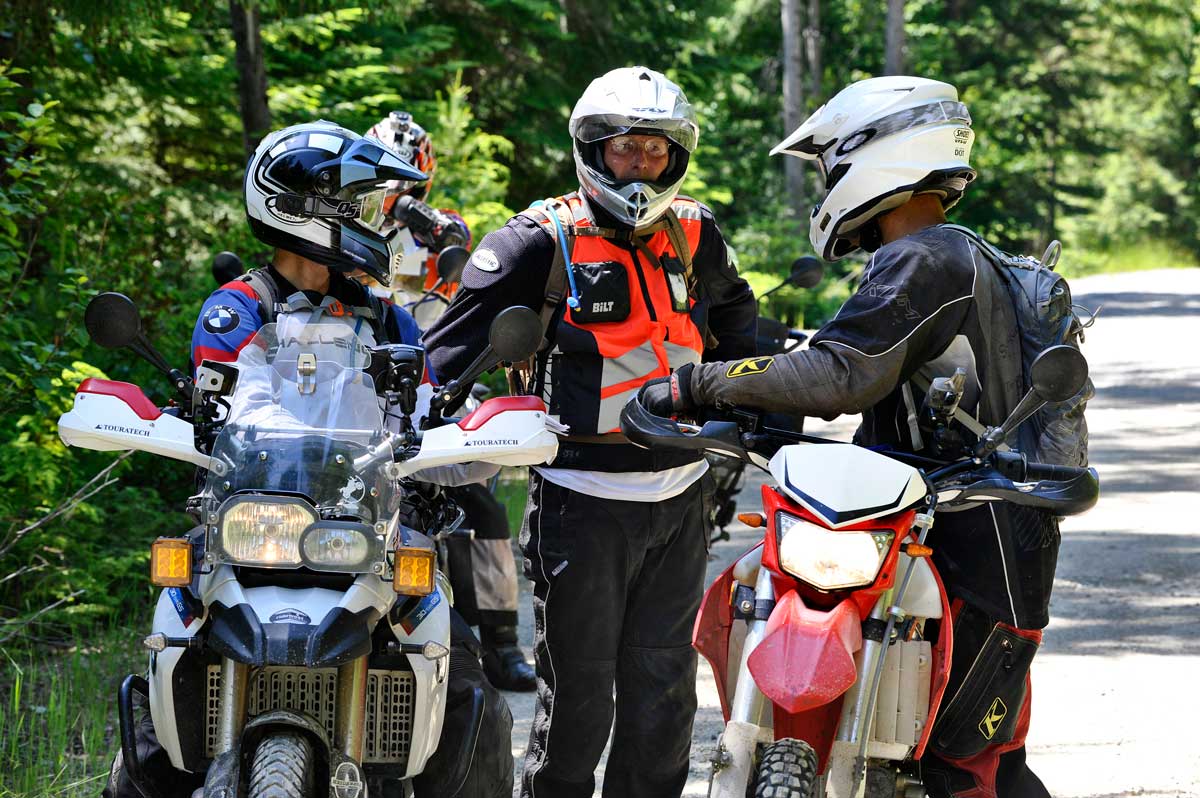
What if someone you’re riding with has the symptoms of hyperthermia (and shame on Steve’s friends for not noticing that something was wrong with him)? Stop, get the rider under whatever shade there is (even if you have to make shade with a tarp or poncho), remove the rider’s helmet, gloves, jacket, etc., and if he’s alert and capable of swallowing (don’t pour water down an unconscious person’s mouth), give him as much water as he can comfortably drink, along with energy drinks, or a Pedialyte mix.
Aggressively cool the rider… you want to make sure that minor hyperthermia doesn’t become heat stroke… if you have water, or there’s a stream nearby, cool the rider off by soaking him completely.
In most cases, resting, shade, and hydration lead to prompt recovery, but don’t let a groggy rider get back in the saddle. The ride is usually over for anyone dehydrated and overheated enough to need care. It can take 24 hours to fully recover from even moderate dehydration. Think about quitting the ride, making camp where you are, or, if you have to keep riding, take it slow, get to the next town and call it a day.
Hyperthermia is a classic “low speed” emergency. It takes some time to develop, the cause is known, the progression is linear, and most of the time, with acclimatization, and adequate and frequent hydration, it isn’t a problem at all… and, with that hydration pack on your back, you look just like a Dakar racer….
John Luck is a long-time motorcycle rider, and when he's not headed somewhere on his bike, he can usually be found in Patagonia or Antarctica, where he works as an EMT and photographer on various expeditions. He’s just returned from his 14th Antarctic expedition.

Comments