 Sticky logo
 Search


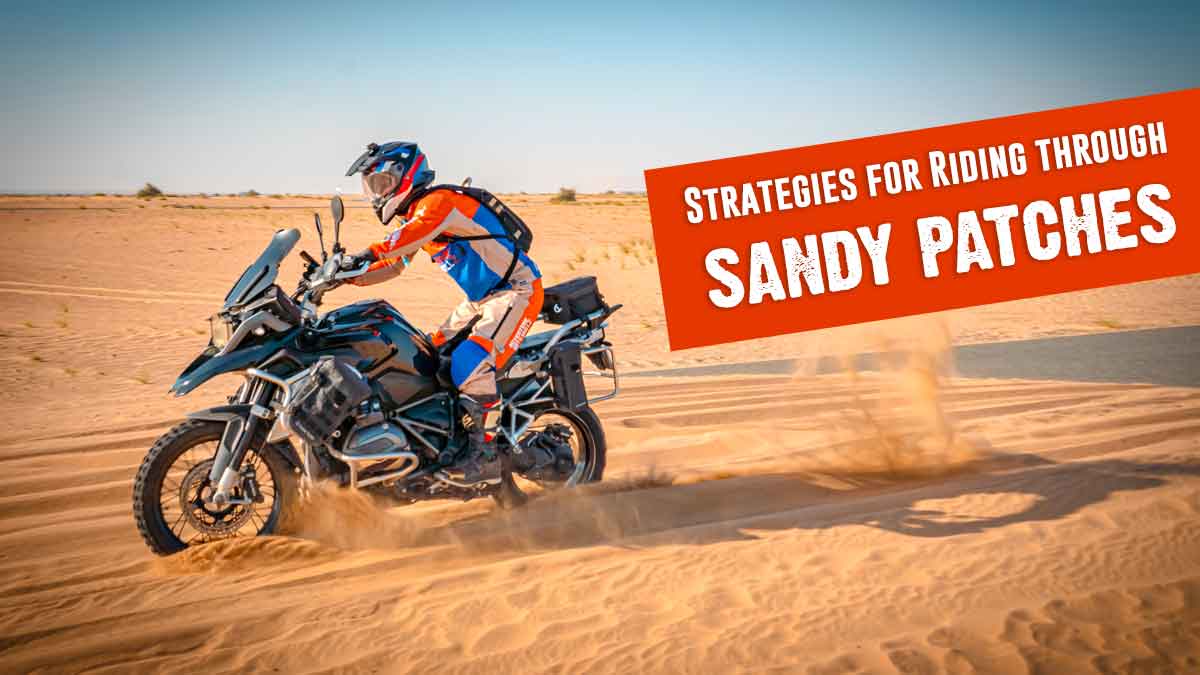
When you tell your friends the upcoming ride will have a few sand crossings, you will surely hear the usual complaints of “I hate sand” or “Sand is my nemesis.” Here are a couple of tips you and your riding buddies can use to get through these tricky and often fear-generating sections as smoothly as possible.
But first, remember not all sand is created equal. Depending on where you ride, you may encounter anything from hard-packed beach sand to soft, powdery talcum. Every type of terrain requires a slightly different approach. Here, we look at crossing a short patch of the softer stuff built up across a trail.
 Sand meets asphalt: roadblock or opportunity?
Tip 1: Standing Riding Posture
Standing riding posture is my preferred technique when approaching a soft sand crossing. Standing on the pegs gives you several advantages:
- A better view of the crossing, allowing you to see the best line through
- Allows for more dynamic counterbalance inputs, as compared to sitting
- The lower leg grip used during standing allows for a more relaxed grip on the handlebars
When riding in soft sand, the bike tends to move unexpectedly beneath you. That’s just the nature of sand riding. Your job is to flow with it, not fight against it. Think of it like surfing. Standing lets you use your body weight to steer the bike and maintain balance. And standing lets us weight the foot pegs to steer the bike, instead of gripping tightly onto the handlebars. This allows the front tire to wander around in search of traction and stability.
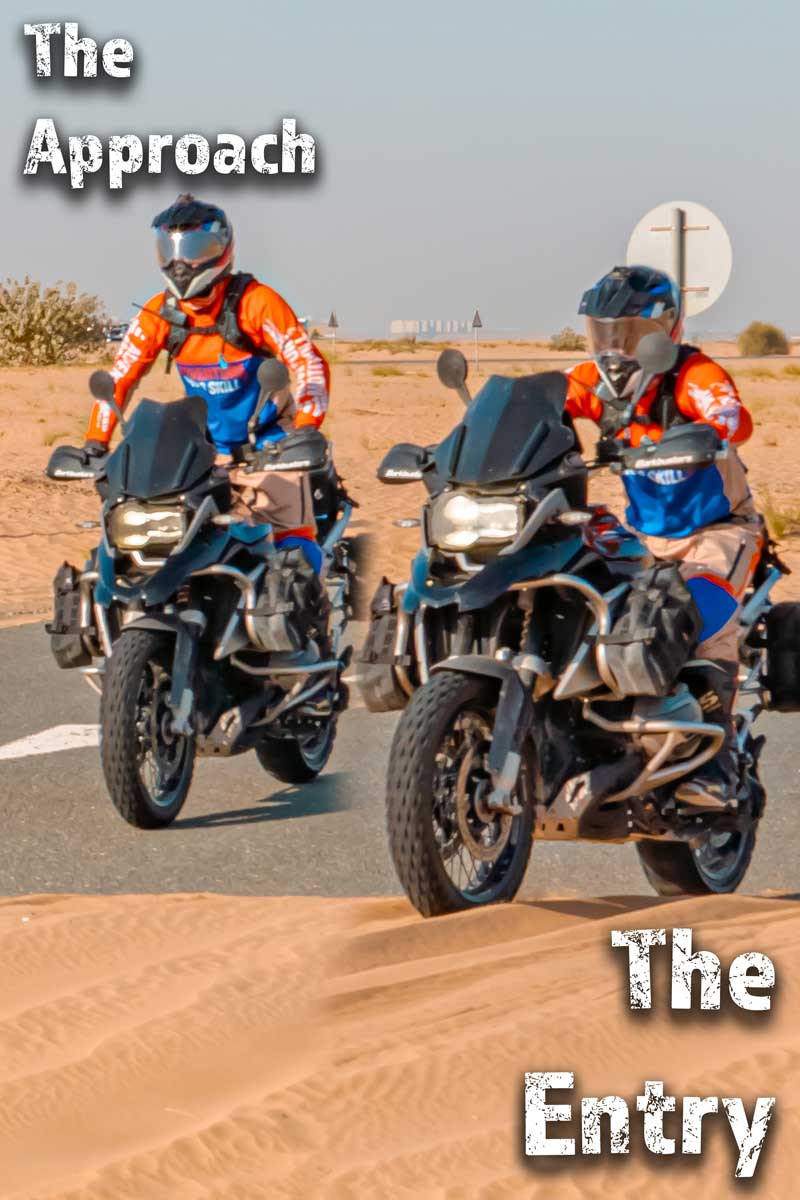 Transition from neutral standing to “attack” position while modulating momentum.
While standing, transition from neutral standing to a squatting-standing or “attack riding” position as needed:
- This lower body position improves stability on the bike while still enabling you to absorb bumps with your legs actively
- Keeping your elbows wide and shoulders relaxed helps maintain a balanced and fluid riding posture
The key here is to stay adaptable to allow quick counterbalancing movements that provide stability.
Common mistake: Holding too tightly on the handlebars. This restricts the bike’s ability to react to the inevitable wobbles that happen in sand. Instead, stay loose on the bars.
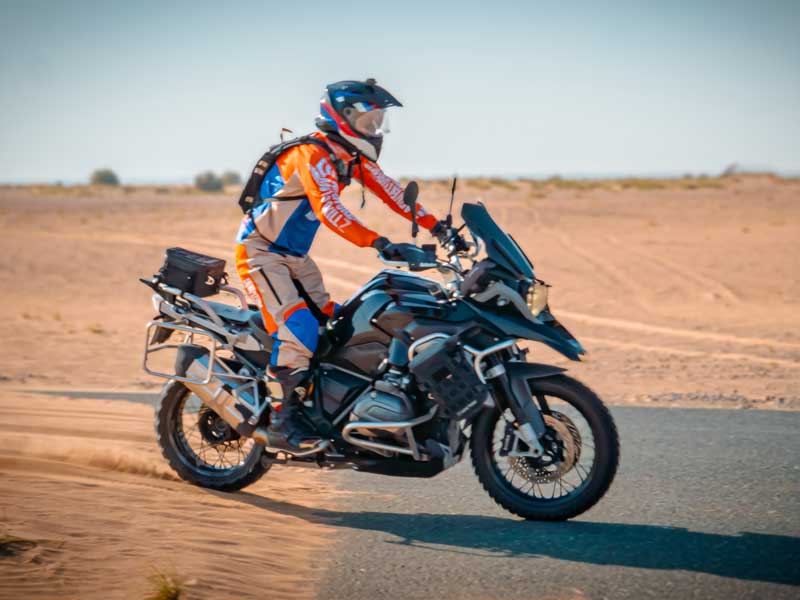 Stay relaxed: use body positioning and momentum control to ease back onto the road.
Tip 2: Throttle Control, AKA Speed Modulation
So you’ve got your body position sorted. Now, let’s talk about throttle control. Many riders think the key to riding sand is to pin it, move your hips backward, and hang on. The real secret is speed modulation. What do I mean by that? Instead of holding the throttle wide open, try using controlled bursts of momentum. Giving the throttle a quick twist to get the bike up on top of the sand and allow the rear tire to power you through. The bursts of momentum cause the bike to become stable. This stability allows easing off the throttle to remain in control. It’s all about maintaining that balance between speed and control. Find that sweet spot and you’ll be gliding across the sand like it’s pavement.
• Putting it All Together to Enter the Sand
Slow down a bit before entering the sand. This gives you more time to assess the terrain, find the best riding line, and identify a safe starting point to blip the throttle. Apply a quick stomp onto the foot pegs with your body weight to compress the suspension. With the suspension fully compressed, quickly add a blip of throttle. The suspension will rebound up, signaling you to transition into the “attack riding” stance. Creating this “lighter” front tire helps the bike transition up onto the sand.
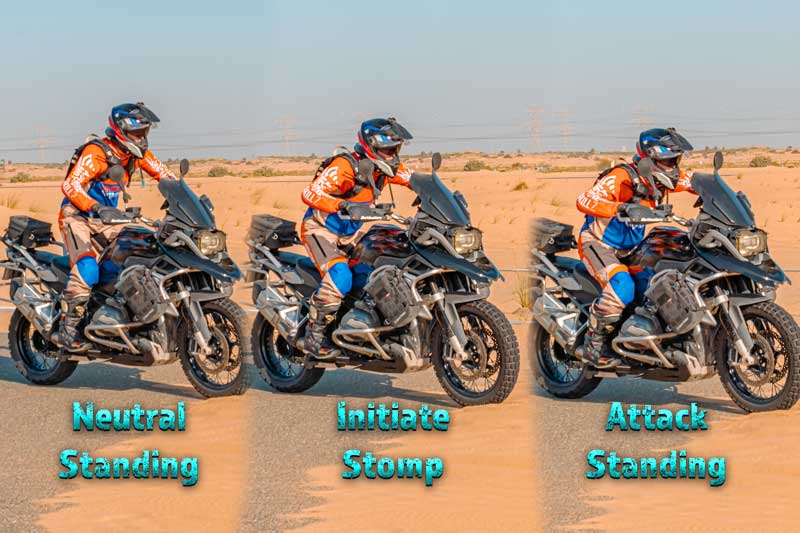 If the sand has piled up, preloading the suspension helps to get up on top of the sand.
• Now Ride the Sand
If the bike starts to feel unstable, slows down, or appears to be stopping, it is time to repeat the throttle blip. On long sections, repeating this process of momentum bursts allows you to ride at a more comfortable pace versus riding flat-out Dakar-style.
• And Exit the Sand
Just before exiting the sand, roll off the throttle smoothly and prepare to weight those foot pegs. Transitioning from a loose surface environment, such as sand, where the rear wheel is prone to excessive spin, to a higher traction surface can lead to a high-side fall if the bike suddenly regains traction.
Instead, use this roll-off technique on the throttle combined with counterbalancing to allow the bike to regain traction on the road or trail smoothly.
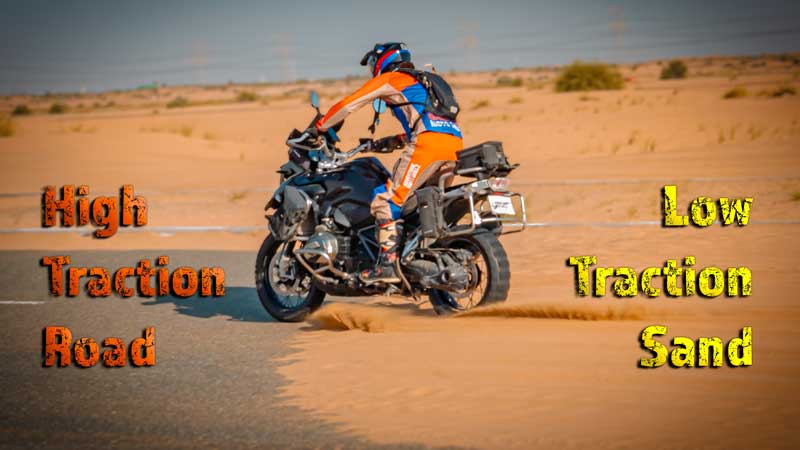 Be ready to feel the bike regain traction.
Crossing sandy patches is not everyone’s favorite part of a ride, but it’s a situation every ADV motorcycle rider will need to tackle at some point. With practice and planning, you can turn this challenging task into a manageable and even enjoyable experience. Who knows, you might even find yourself looking forward to the next sandy patch.
See the accompanying helpful video:
{youtube}jqWAVipoaw4{/youtube}
 ADVMotoSkillZ coach Mike Carroll is an off-road motorcycling enthusiast and instructor. Once a Harley rider, Mike now thrives on off-road adventures with his BMW R1200GS. He is a certified Enduro Action Team Off-Road Instructor and channels his passion into ADVMotoSkillZ. Mike and his wife, Kristen, co-founded ADVMotoSkillZ and enjoy helping riders improve their off-road capabilities. YouTube @advmotoskillz | Instagram @advmotoskillz | AdvMotoSkills.com

Comments