 Sticky logo
 Search


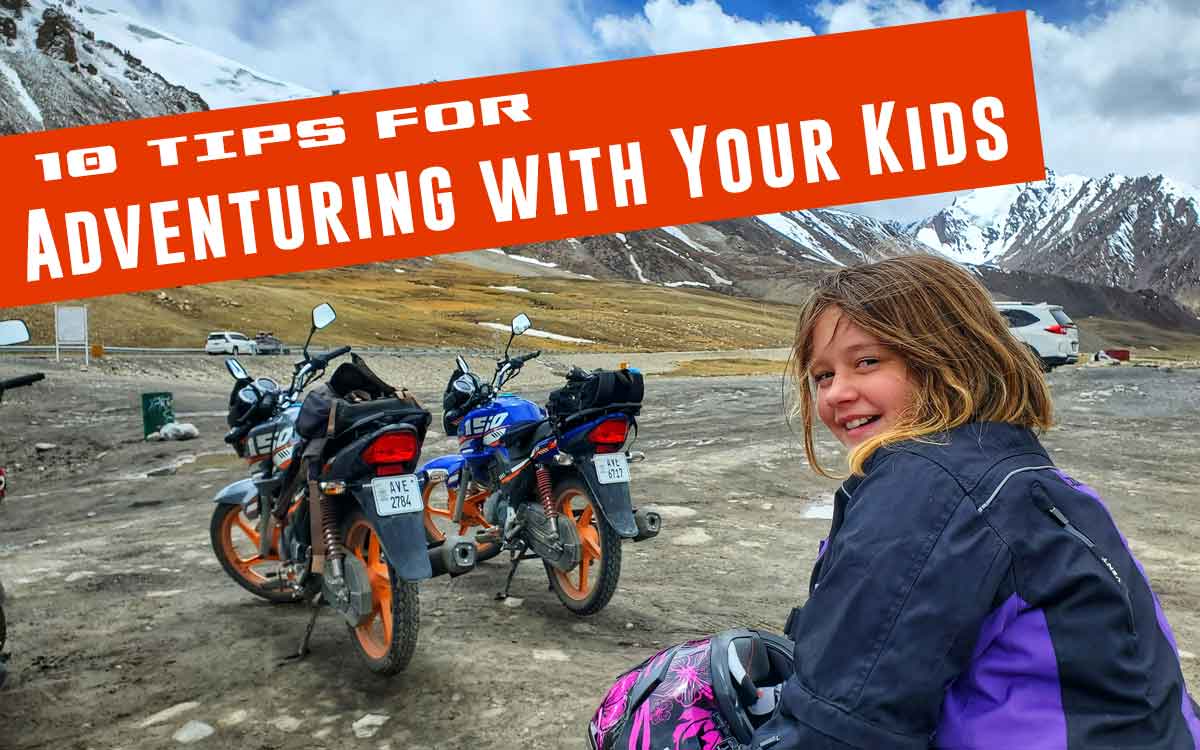
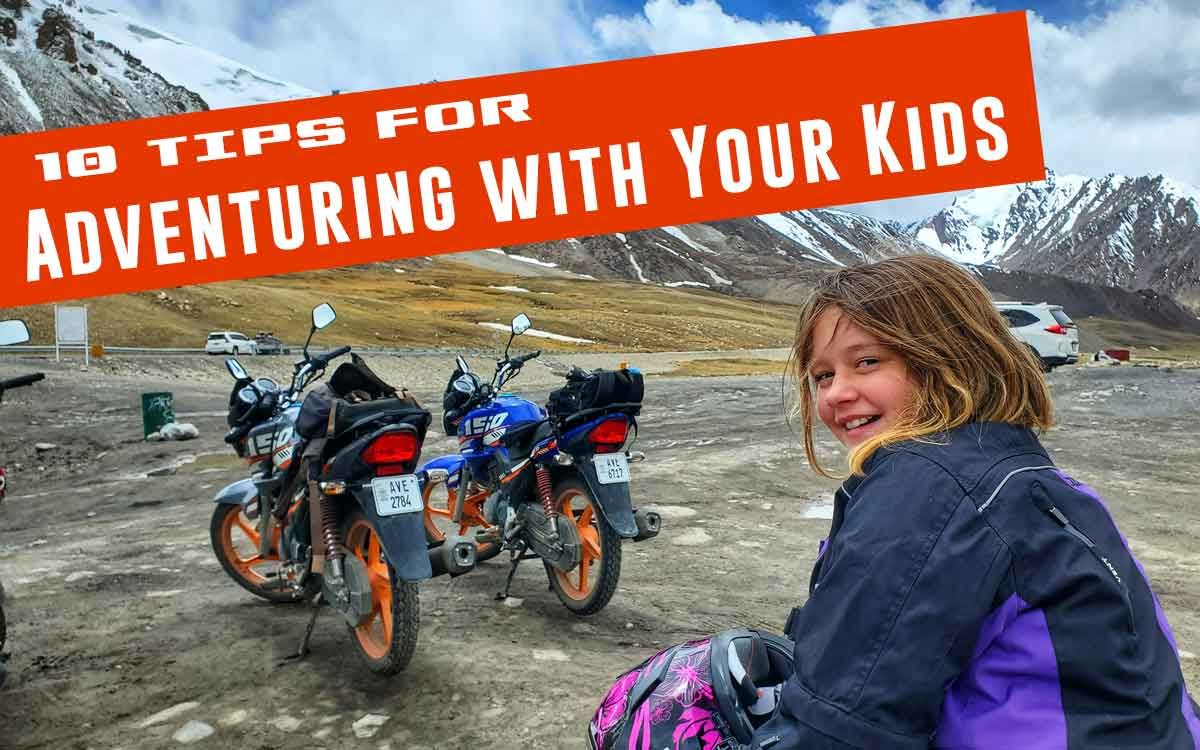
Motorcycles are my life; they’re my career, hobby, and passion. So when my daughter Montessa was born, there was never a question about whether I would continue riding; only how to include her in my globe-trotting motorcycle travels in a safe, fun, age-appropriate way. Starting in a sidecar at just four months old, Montessa has now clocked tens of thousands of moto-miles from Mexico to Pakistan and all across the U.S., and we’ve both learned quite a bit along the way. Subsequently, here are my Top Tips for bringing kids into the world of adventure riding.
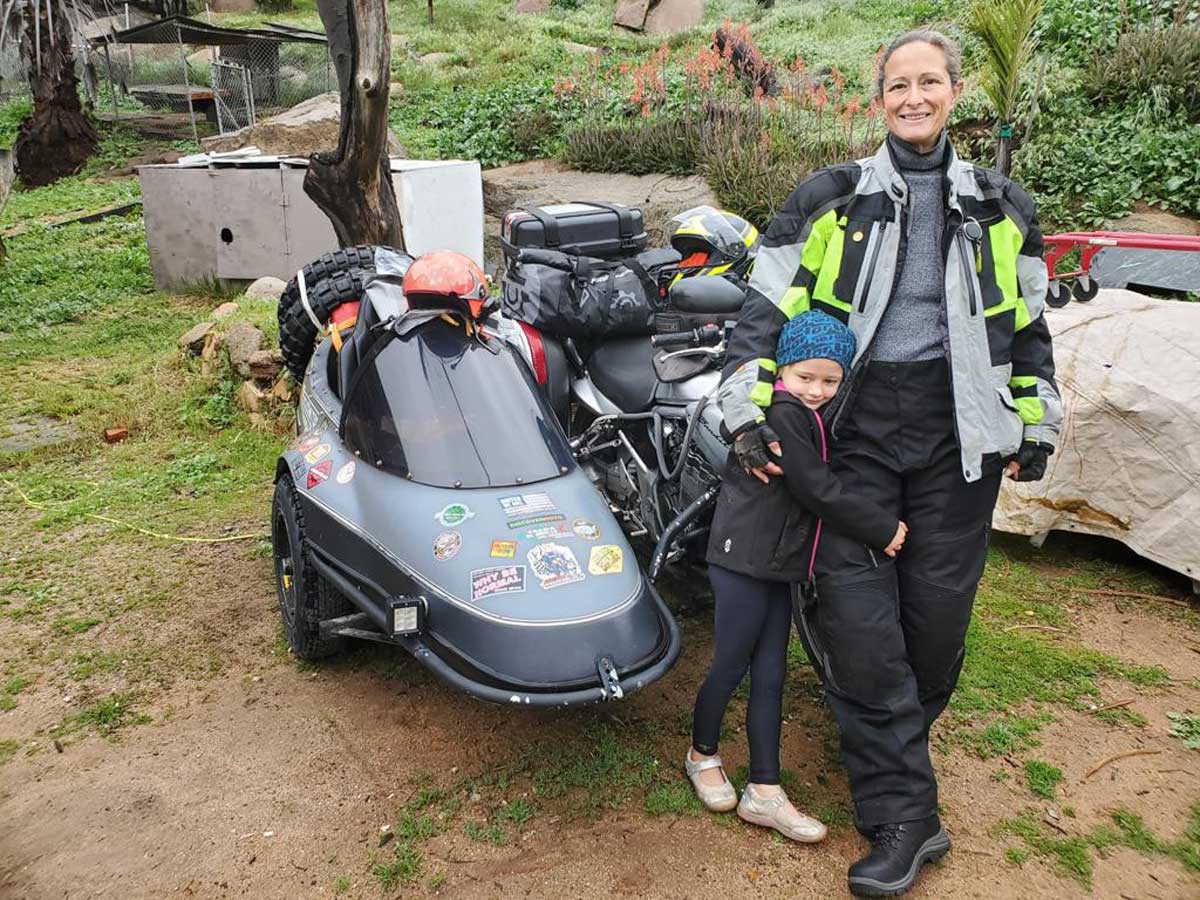 Wendy and Montessa depart California for a two-year adventure in Central America.
1. Involve them in the planning process.
Spend lots of time together looking at maps, pictures, videos, etc. Show them where your destination is relative to places they’re familiar with, then look at more detailed maps of the areas you will be riding. How is the landscape, culture, food, and riding similar to home? How is it different? What kind of experiences are you looking forward to? Is there anything you’re nervous about? Practice basic phrases in the local language, if applicable. This will help them feel like an important part of the adventure, and help you better understand what will make this ride memorable for all the right reasons.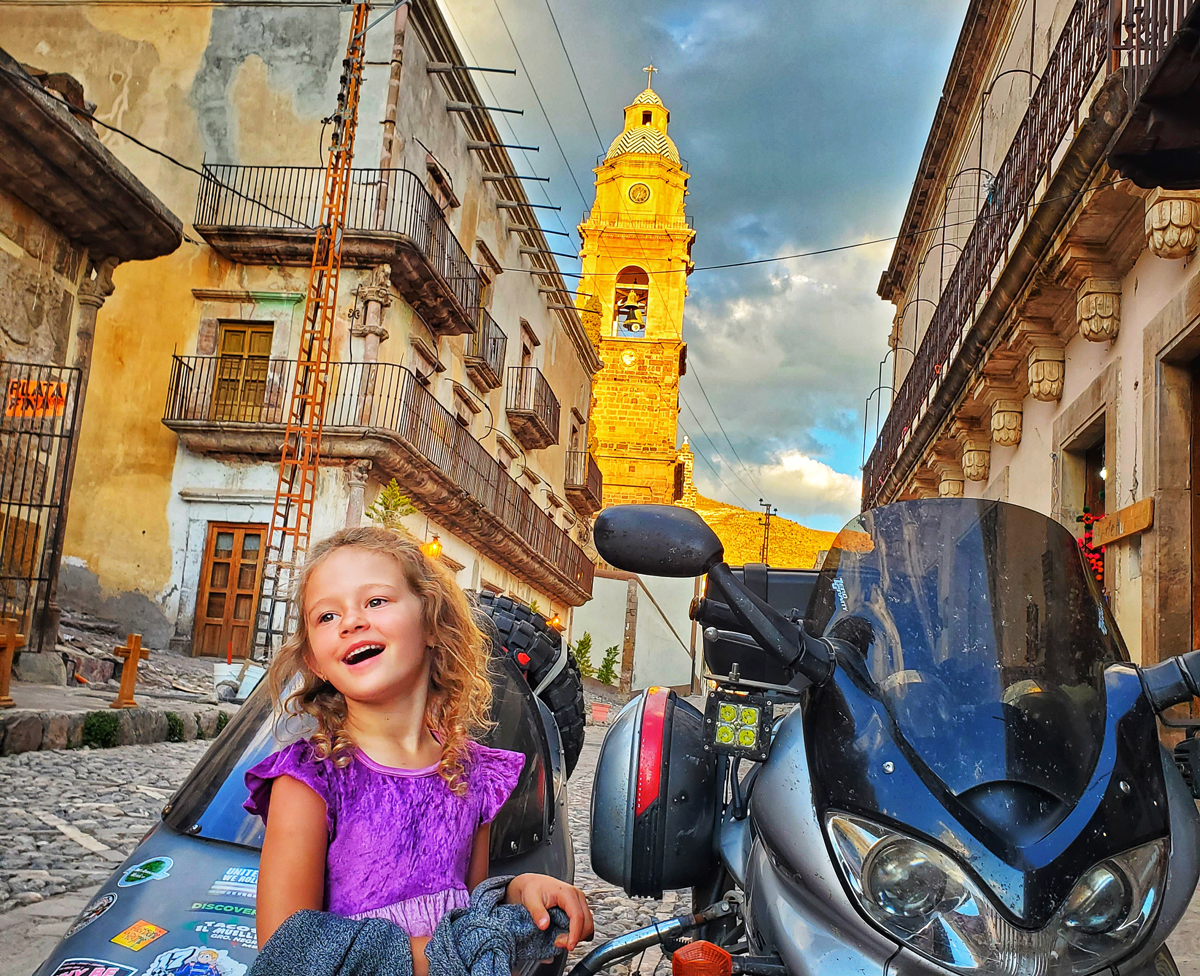 Enjoy the beautiful sunset in Real de Catorce, Mexico.
2. Remember that they have different desires and interests.
An adventure should mean experiencing new things and expanding your horizons, but you still want to take their interests into account. I love riding all day and she loves the beach. If we can plan a route that allows both, then everyone is happy! Be sure to create opportunities to engage with other kids; this can mean stopping at parks, local markets, festivals, age-appropriate museums, etc. These simple experiences can have a big impact on their growth and understanding of the world and their place in it, especially in foreign countries. The culture and languages may be different, but play is play no matter where you are!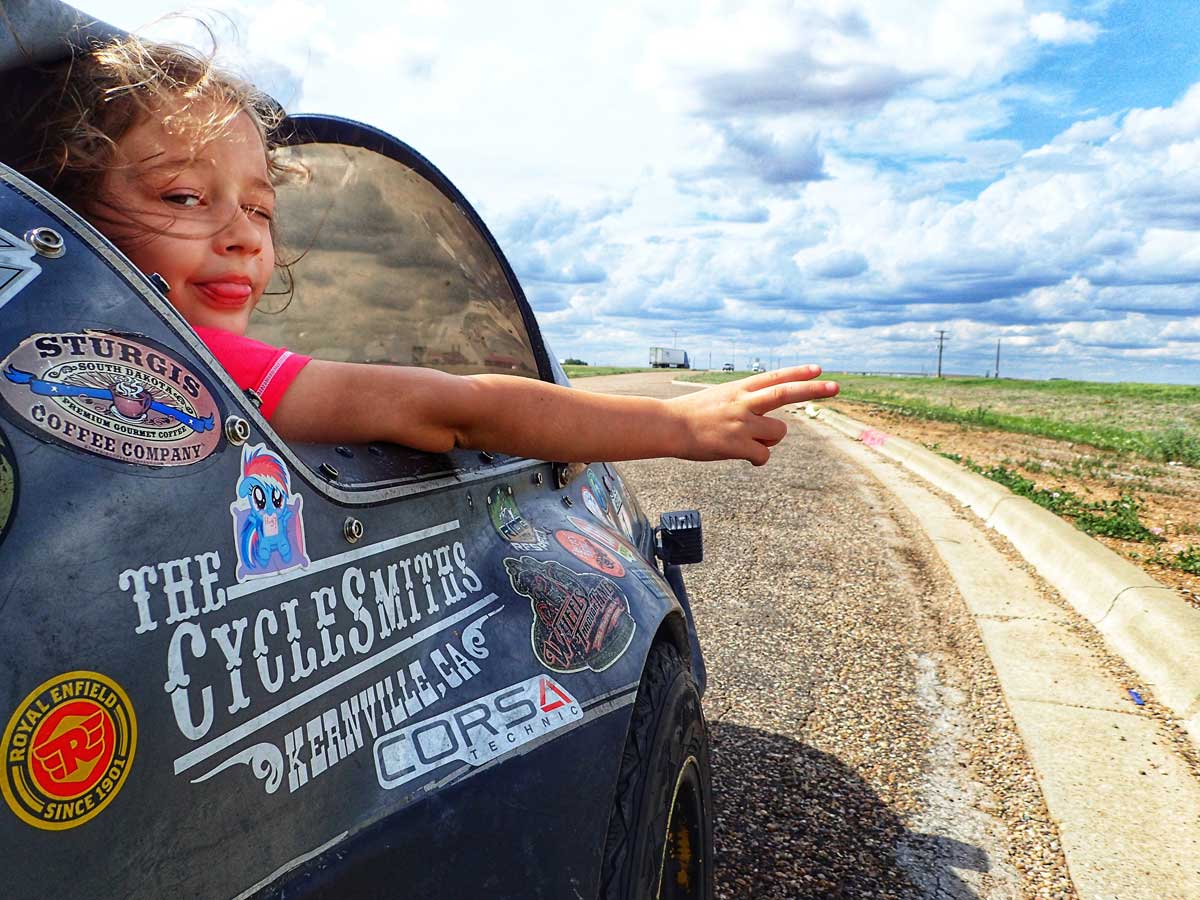 A sidecar is the perfect way to see the world!
3. Make sure they’re safe and comfortable.
True adventures require more than just a jersey and jeans. It can be difficult to find high-quality, age-appropriate gear for little ones, but it does exist. Yes, they will grow out of it quickly, but proper gear will always be well worth the investment. Hand-me-downs might be suitable for much of your children’s kit, but never rely on an old or used helmet. The impact-absorbing components of helmets deteriorate with age, even if they’re stored correctly and never dropped. And how many kids have never dropped their helmet? The cargo it protects is far too valuable to risk cutting corners.
4. Practice, practice, practice.
Before leaving home, spend plenty of time riding around with the exact setup (bike, luggage, riding gear) you plan to use on the road. If you’ll be renting or borrowing a motorcycle in a far-flung destination, you’ll still want to spend plenty of time riding together fully geared up to identify any little issues before they become big ones. This goes for the adults as well as the kids: If the gear is rubbing or the helmet is the wrong size or gloves are too small, that can result in rapidly diminishing enjoyment of your adventure for everyone. Spend time talking about and practicing how to behave in the terrain you are likely to experience—twisties, gravel, mud, steeps hills, etc. If you have helmet comms (a really good idea!), practice using them. If you don’t, make sure they understand that you aren’t yelling at them, but you sometimes you need to talk loudly to be heard over the wind and road noise. Create a system of body taps to communicate things like “I’m tired” (she taps on the back of my neck) or “How are you doing?” (two taps on her knee) or “Hey, check that out!” (tap on her hand, then point.)
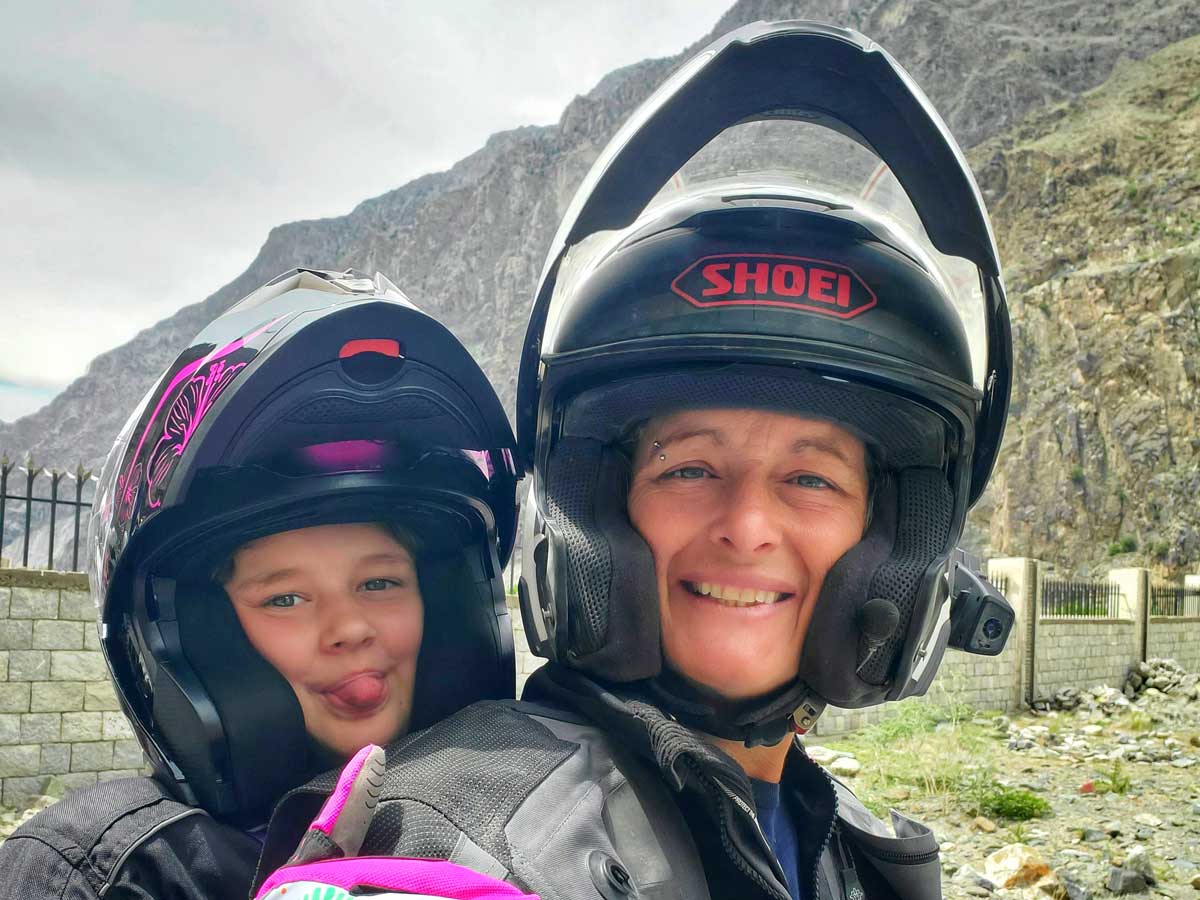 Proper helmet comm system really helps the communication on the road.
5. Give them their own camera!
Starting at age four, I gave my daughter her own camera to use on our rides. (I bought a used Olympus Tough rugged camera so I didn’t have to worry about it getting wet or broken, and attached it to her jacket with a long lanyard so it doesn’t get lost). I was blown away by the images she captured while I was busy focusing on the road! Not only will it keep them entertained and engaged with the experience, but it will allow them to capture what they find most compelling and allow you to experience the journey through your child’s eyes. After every trip, I combine the photos I’ve taken of her with the photos she took herself and have a hardcover memory book printed to commemorate our adventure.
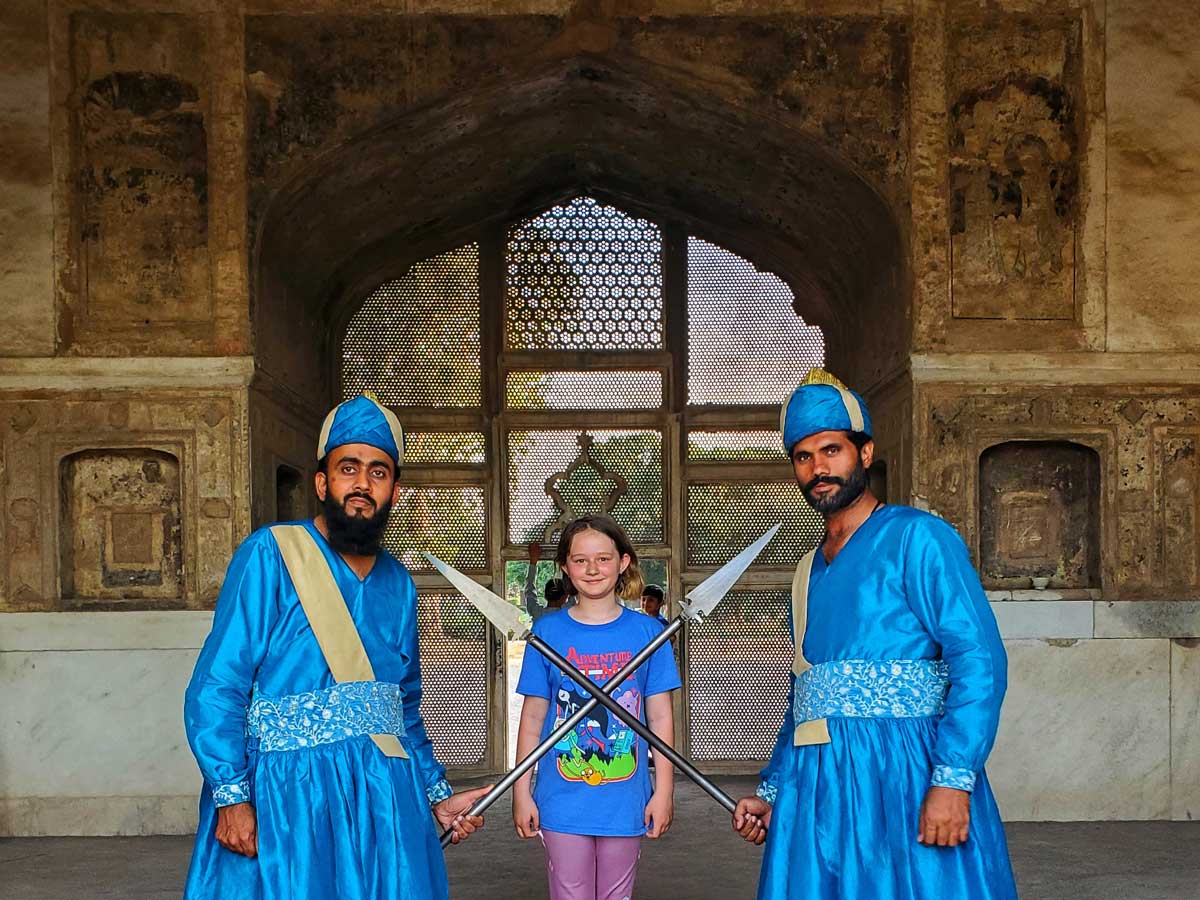 Montessa in Sheesh Mahal (“Palace of Mirrors”), a historic palace in the Walled City of Lahore.
6. Shorten your ride days.
Keep expectations reasonable and your plans flexible. If you plan to make it to a gorgeous camping area down on a river but their interest and energy is flagging somewhere back on a mountain peak, or if you’re passing by things they’re genuinely interested in just to make it to that next waypoint, you’re both going to be unhappy. Remember that this is all new to them! You have experience using all of these muscles, managing fatigue and varying weather conditions, and understanding how that line on the map translates into your real-world ETA. The last thing you want is for this grand expedition to become and endless loop of “Are we there yet?”
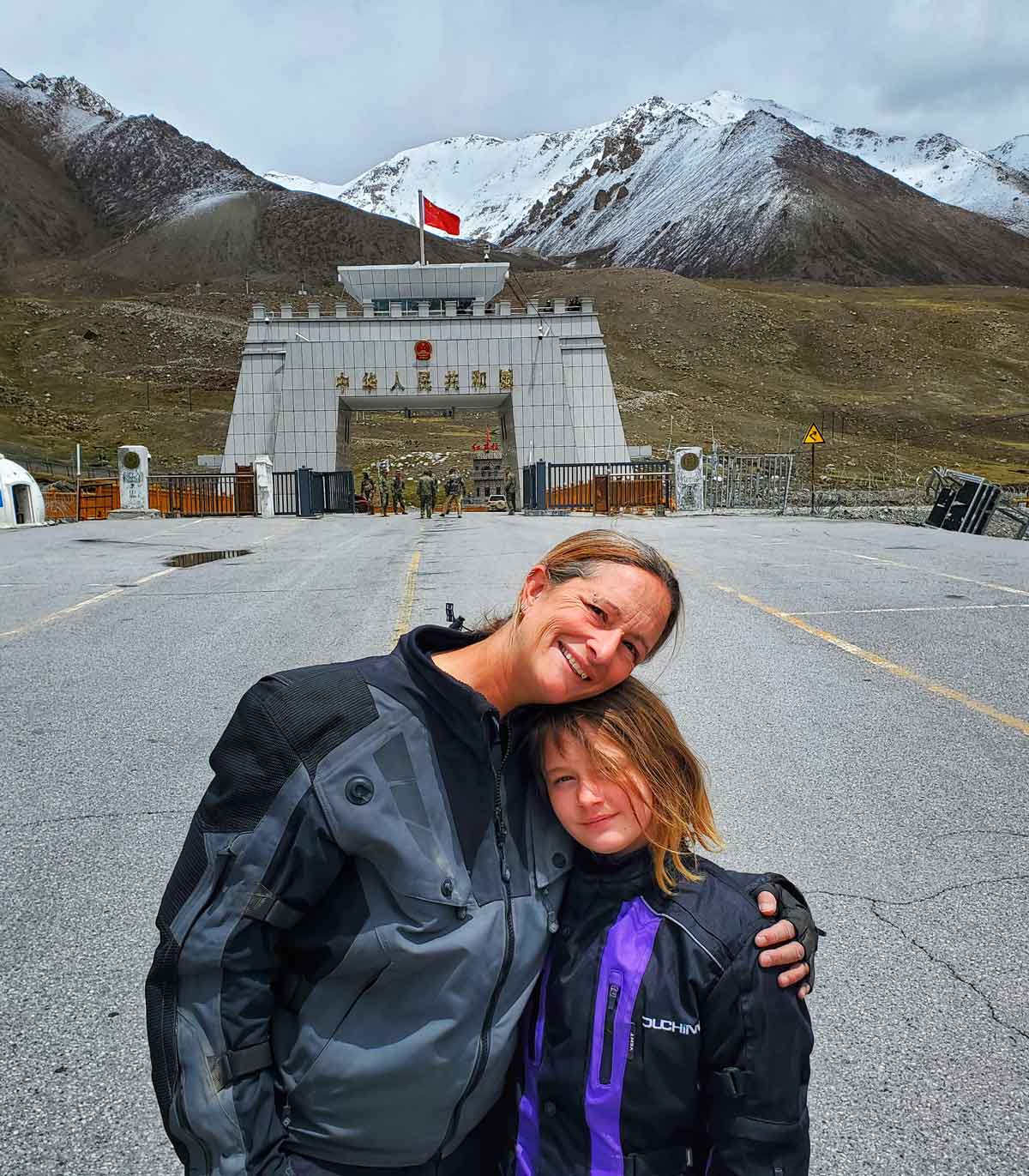 Khunjerab Pass, the highest paved border crossing in the world. At 15,397-foot elevation, it was enough to leave Montessa breathless!
7. Make frequent stops.
This is not just for comfort, but to let them explore. These don’t need to be big destination stops; just take a few minutes to climb some rocks, watch wild animals, splash in a river, or stop at a roadside food stall for a snack. Look for hidden opportunities to break up the ride and burn off some energy while exploring the world around you. Frequent breaks also give everyone a chance to hydrate and stretch their muscles. This not only makes the ride itself safer and more enjoyable, but it will (hopefully) prevent muscle cramps and other such discomforts at night.
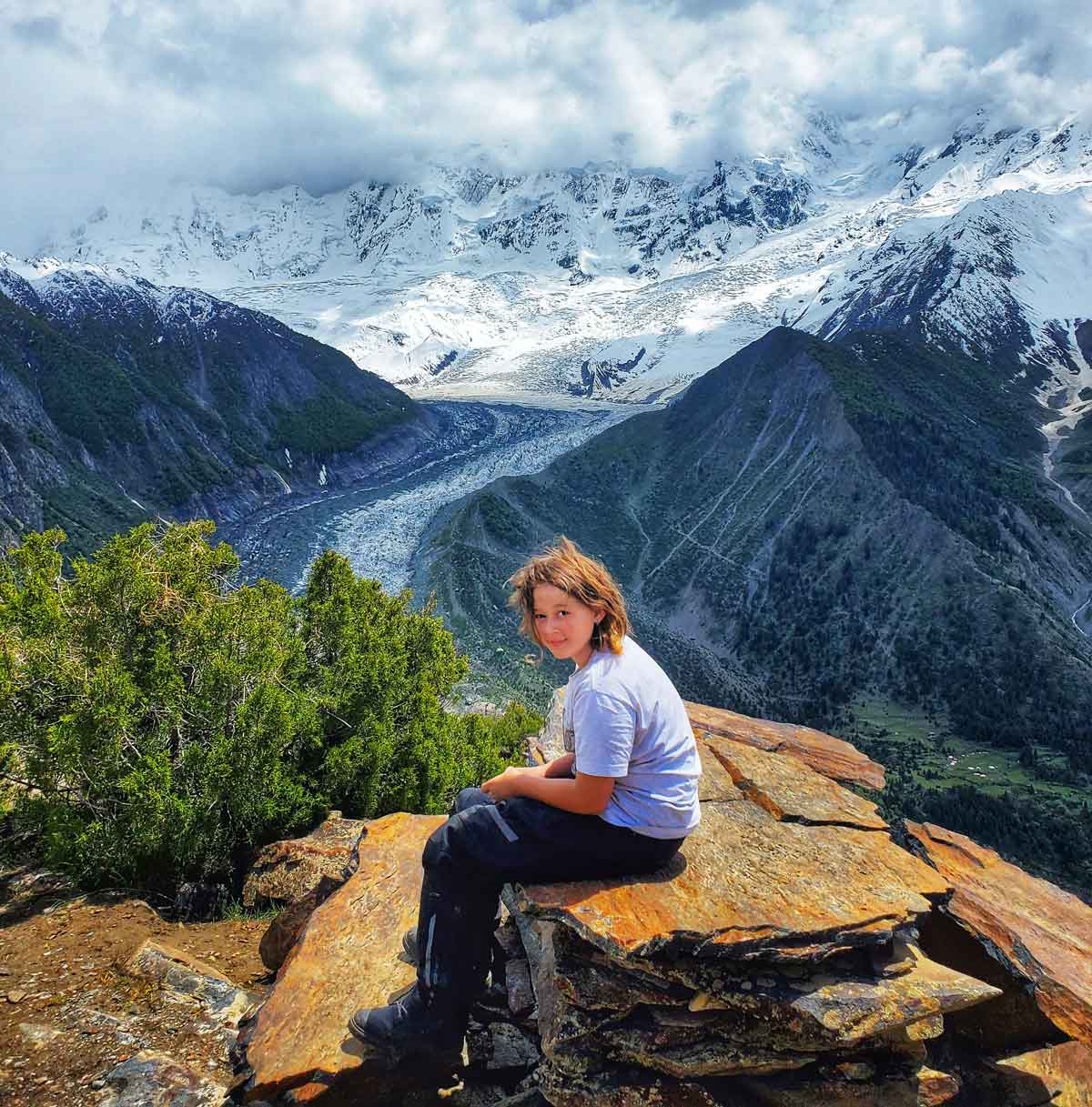 Landslides can’t stop us! After the road disappeared, Montessa continued on foot to the stunning Rakaposhi Glacier.
8. Their dietary needs might change significantly.
Travel can be disruptive to digestive systems. Little stomachs can be much more sensitive to big changes, even if they aren’t usually picky eaters. Allow them plenty of opportunities to sample new things, but don’t feel bad if you sometimes fall back on classic American standbys like burgers or chicken fingers. The ride itself is often adventure enough, and familiar food can help make the entire experience more comfortable. (It’s always a good idea to carry a few different meds in your kit to address gastrointestinal discomfort in adventurers big and small.)
9. Rethink your accommodations.
I’m fine with sleeping in the dirt most days, and one of my most memorable road trip motels was a dodgy joint above a muffler shop that cost the equivalent of $3. While my daughter will generally stay anywhere I choose to stop without (much) complaining, I don’t want her to feel wildly uncomfortable or unsafe. And the truth is, it often only requires a bit of research and a few extra dollars to make her feel like she’s in the Taj Mahal. Scope out properties with unique features to sweeten the deal at little to no cost; simple things like funky rooms, interesting history or, even better, rumors of a haunting might make otherwise drab digs into a real night to remember!
10. Don’t harbor lofty expectations.
Don’t harbor lofty expectations as to what young children will take away from the trip. It can sometimes feel disheartening when it seems as though they’re not having the transformative experience you’d hoped they’d have. I have traveled with my daughter in areas where women are not treated as equals, or where many live in extreme poverty. We’ve spent hours talking about how lucky we are, especially as women, to live where we do with the choices and opportunities we have. Nine times out of ten, she will gaze at me lovingly and say something like “Remember that goat we saw yesterday? I bet his name is Jeremy.” and I die a little inside. But I’ve also learned that children process their adventures in their own time. Often, the lessons sink in slowly, and as they grow older, they reflect on the earlier experience with a deeper understanding.

Bonus: Montessa’s Motorcycle Travel Tips for Kids
- Take tons of pictures! I like to look at pictures I took when I was much younger because it can be easy to forget some really wild things I did then. I also see a lot of cool stuff that my mom doesn’t see while she’s riding, especially animals and scenery. And sometimes you just see so much cool stuff on one trip that you kind of forget, even if it’s just a week or two later.
- Make up games when you’re bored. It’s not super exciting every minute on the back of the motorcycle. You can make up games. Maybe picking out interesting animals, or people wearing a certain color of clothes, or motorcycles or buses that have way too many people on them. You can count them or make up funny stories about them to help pass the time. We also like to do “Cute Dog Alerts” whenever we see cute dogs. Sometimes I also just hold onto my mom’s jacket and lean into her, then I can relax and let my imagination take over for a while.
- Speak up as soon as something starts to hurt! So if something is starting to hurt, like your neck hurts from wearing a helmet all day or your butt hurts, you need to say something right away before it gets worse. If you can take a break or fix it so it doesn’t hurt anymore, it will make your ride so much better.
- Tell everyone about your adventures! So many kids never get to ride a motorcycle at all, or ever leave their country. Now I have photo books to show, so when I say I rode to China, I can show them the pictures! Then when they finally believe me, they start to ask questions and I can tell them all about these places. There are so many beautiful places and so many nice people all over the world, I’m really lucky to get to visit them.
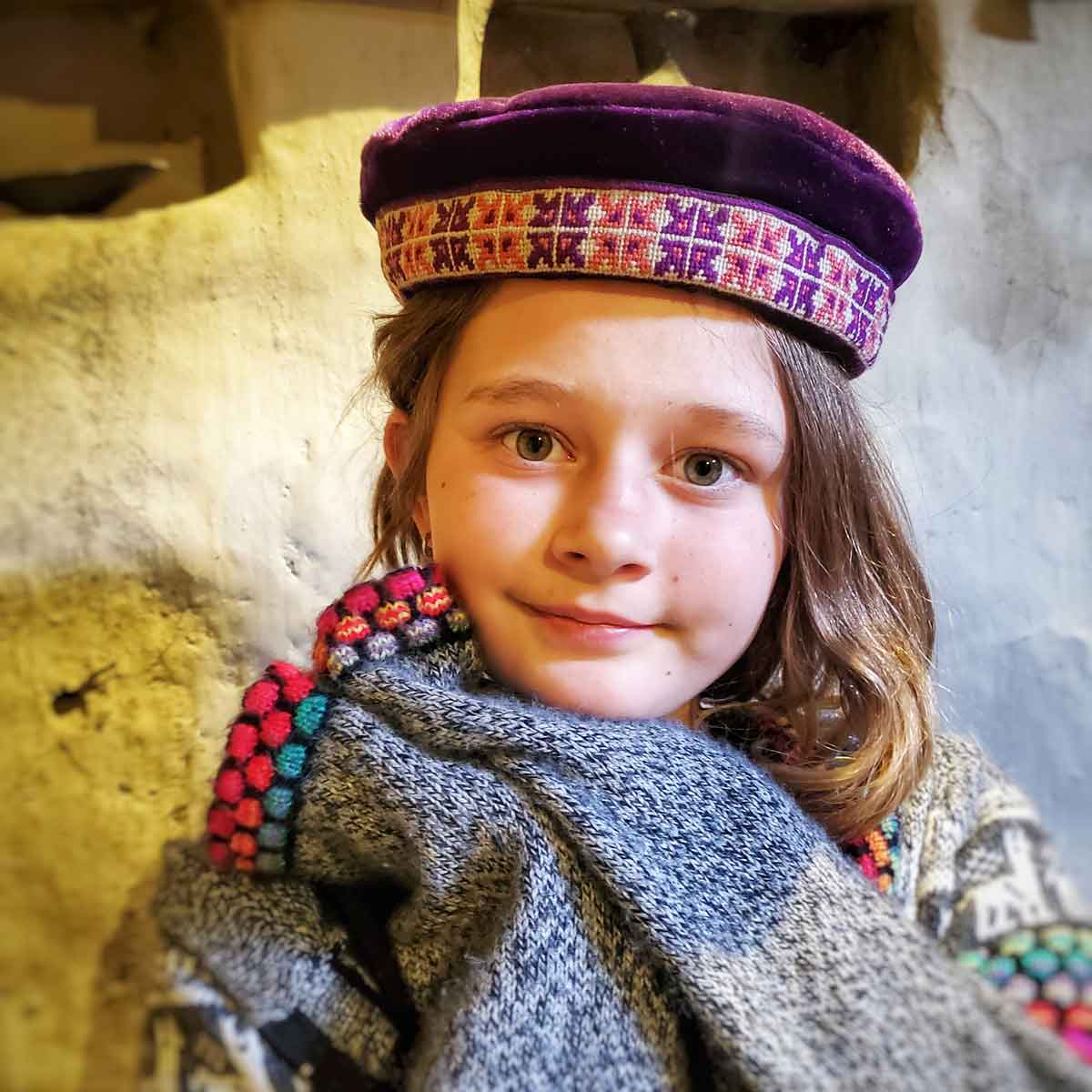 Montessa dons a traditional hat in a 700-year-old home in Gulmit, Upper Hunza, Pakistan.
 Wendy Crockett has built her life around motorcycles. She has been a powersports mechanic for 25 years and is a on- and off-road ride instructor. She has ridden more than a million miles in countries all around the world; was the first woman to win the 11-day, 11,000-mile Iron Butt Rally; and holds a world record as a long distance rider. PushingMiles.com

Comments